

 by
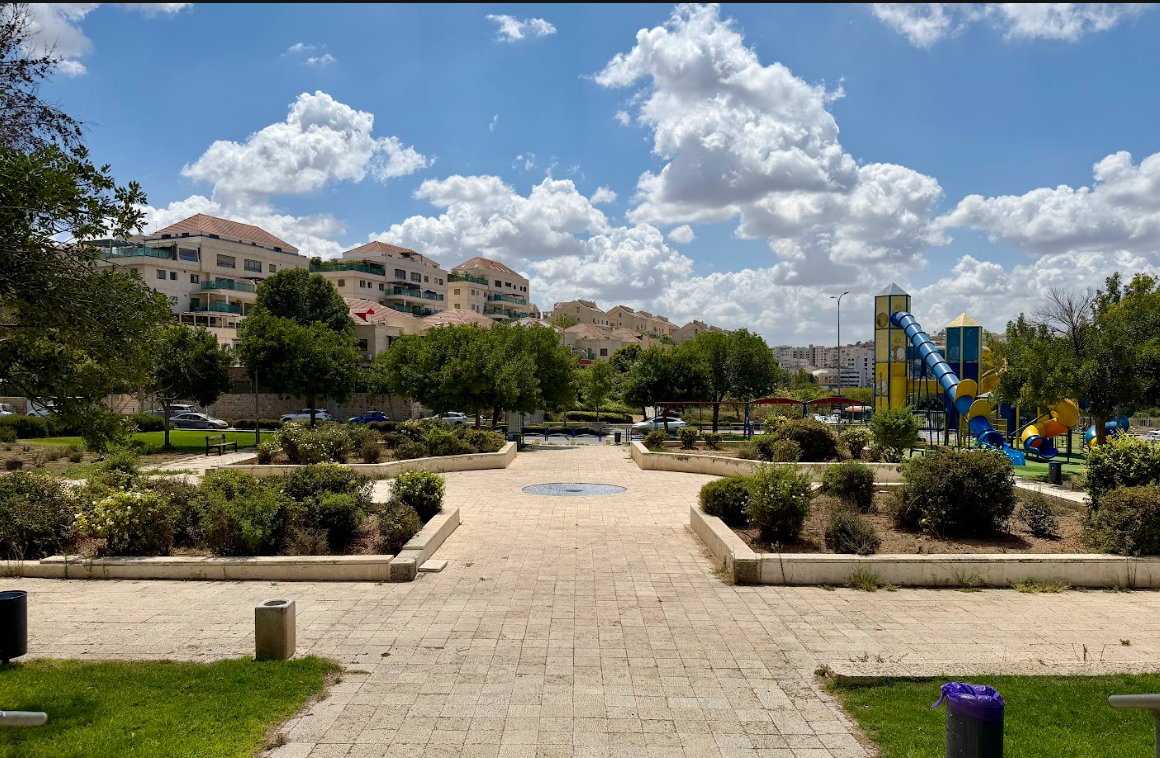
For many families arriving in Beit Shemesh from the US or the UK, the first question is not how many rooms they need. It is where the children will play. In a city built largely of apartment buildings, the garden apartment, or dirat gan, is the closest thing to a house with a yard that most buyers will find.
That makes garden apartments some of the most sought-after properties in Ramat Beit Shemesh Aleph. It also makes them some of the easiest to get wrong. A garden that looks private may not be legally yours. A pergola may never have been approved. This guide sets out what to check, why it matters, and how to judge value in the current market.
Understanding Garden Apartments
A garden apartment is a ground- or entrance-floor unit with private outdoor space attached to it. In RBS Aleph, most were built in the late 1990s and 2000s, as the neighborhood became the center of the city’s English-speaking community. Supply is fixed. Each building has only one or two, and new construction in the neighborhood is limited.
In practice, that scarcity is the investment case. Demand for outdoor space has only grown since 2020, while the number of garden apartments in established neighborhoods has not.
Checks Before You Buy
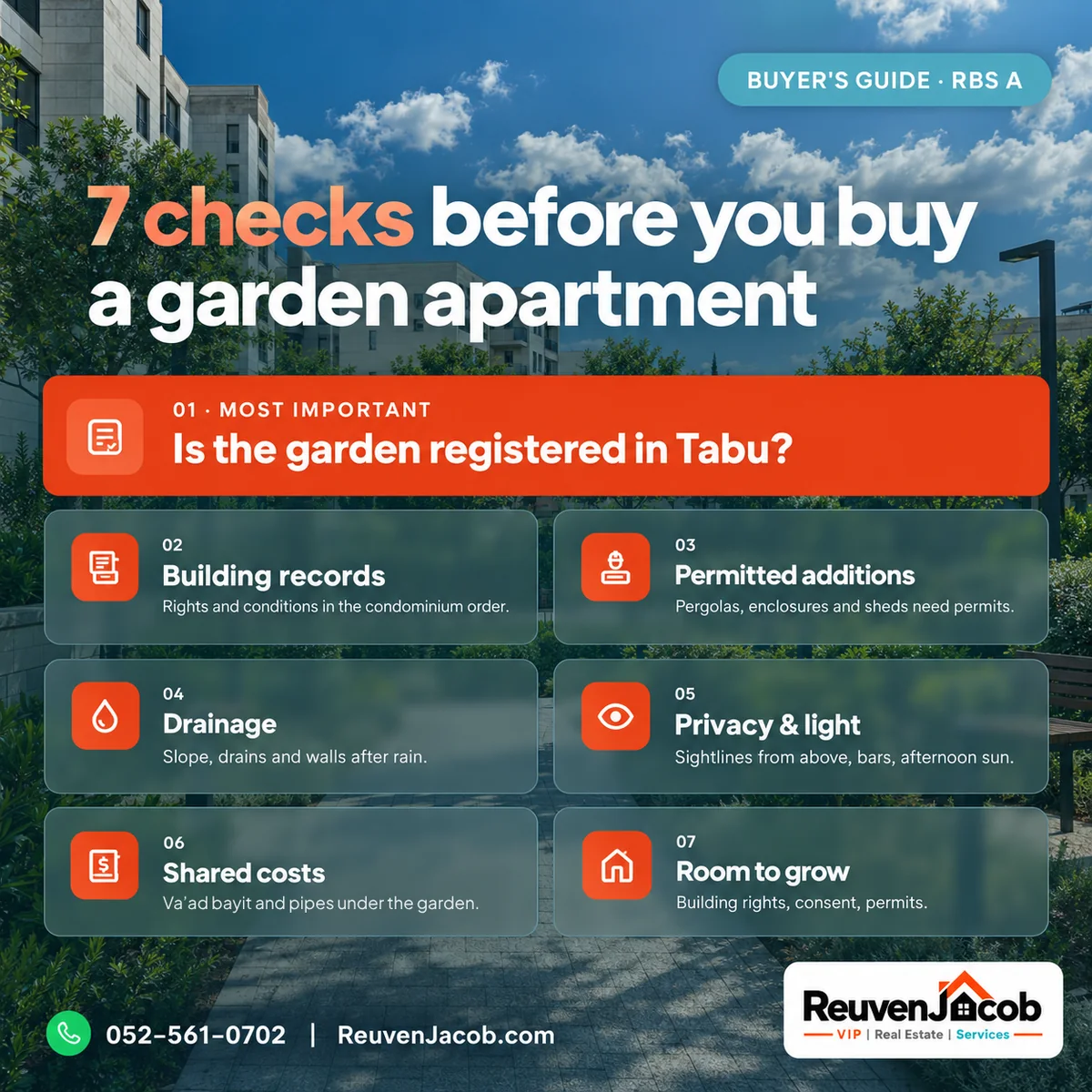
1. Is the garden registered in Tabu? This is the most important question. According to the Nefesh B’Nefesh glossary of Israeli real estate terms, a gina b’shimush is a garden in use that is not registered in Tabu as belonging to the apartment. Use is not ownership. Your lawyer should confirm that the garden is attached to the unit in the land registry or in the building’s condominium documents.
2. What do the building records say? The condominium order (bayit meshutaf) sets out each owner’s property, rights and responsibilities. It also shows whether the garden comes with conditions, such as access for building maintenance.
3. Were the additions permitted? Pergolas, enclosures and storage sheds are common in garden apartments. As Buy It in Israel explains, appraisers may assign no value to illegal additions, and that can reduce the mortgage a bank is willing to offer. Ask for the permit file.
4. How does the garden drain? Ground-level properties carry ground-level risks. Look at the slope, the drains and the walls bordering the garden after rain, and ask about waterproofing work.
5. What about privacy, security and light? Check sightlines from upper-floor balconies, window bars and the position of the mamad. A garden that is shaded all afternoon may feel very different from the photographs.
6. Who pays for what? Clarify the monthly va’ad bayit fee and whether the garden owner is responsible for any shared pipes or utilities that run beneath it.
7. Can it grow with you? Many garden apartments come with an option to extend. Building rights, neighbor consent and permits all apply, and our guide to planning a home extension in Beit Shemesh walks through each step.
Your Professional Team
A garden apartment purchase deserves the same diligence as buying a house. In practice, that means three professionals before signing:
- A real estate lawyer to check Tabu, the condominium order and any registered conditions on the garden
- An appraiser to value the property and confirm whether additions are recognized, since the bank will rely on that valuation for the mortgage
- A building engineer to inspect drainage, damp and the condition of the outer walls
The cost of these checks is modest compared with the cost of a mistake. Our Service Hub lists professionals who work in Beit Shemesh every day.

Garden Apartment Prices
Garden apartments rarely compare neatly with standard apartments on size alone. According to recorded Israel Tax Authority sales compiled by Semerenko Group, the median price for Beit Shemesh homes of 120–159 m² was about ₪3,025,000 over the past four quarters. A garden apartment of similar size will usually sit above that median, because the garden itself carries value that a price per m² of interior space does not capture.
The market backdrop favors prepared buyers. The Bank of Israel cut its rate to 3.25% in September 2026, its third cut of the year, while national home prices fell about 1.5% over the previous twelve months. Rental demand for larger homes remains strong, with five-room-plus apartments in Beit Shemesh listing at a median of about ₪8,500 a month, according to Semerenko Group.
Garden Apartment or Upper Floor?
Neither choice is right for everyone. The trade-offs are clear:
- Garden apartment: private outdoor space, no stairs, easy hosting and a ready-made sukkah location; less privacy from above and more attention to drainage.
- Upper floor: more light and views, and fewer ground-level maintenance concerns; dependence on an elevator and usually a smaller private outdoor space.
For families with young children, frequent guests or older relatives, the garden apartment usually wins.
The Nachal Nachshon Option
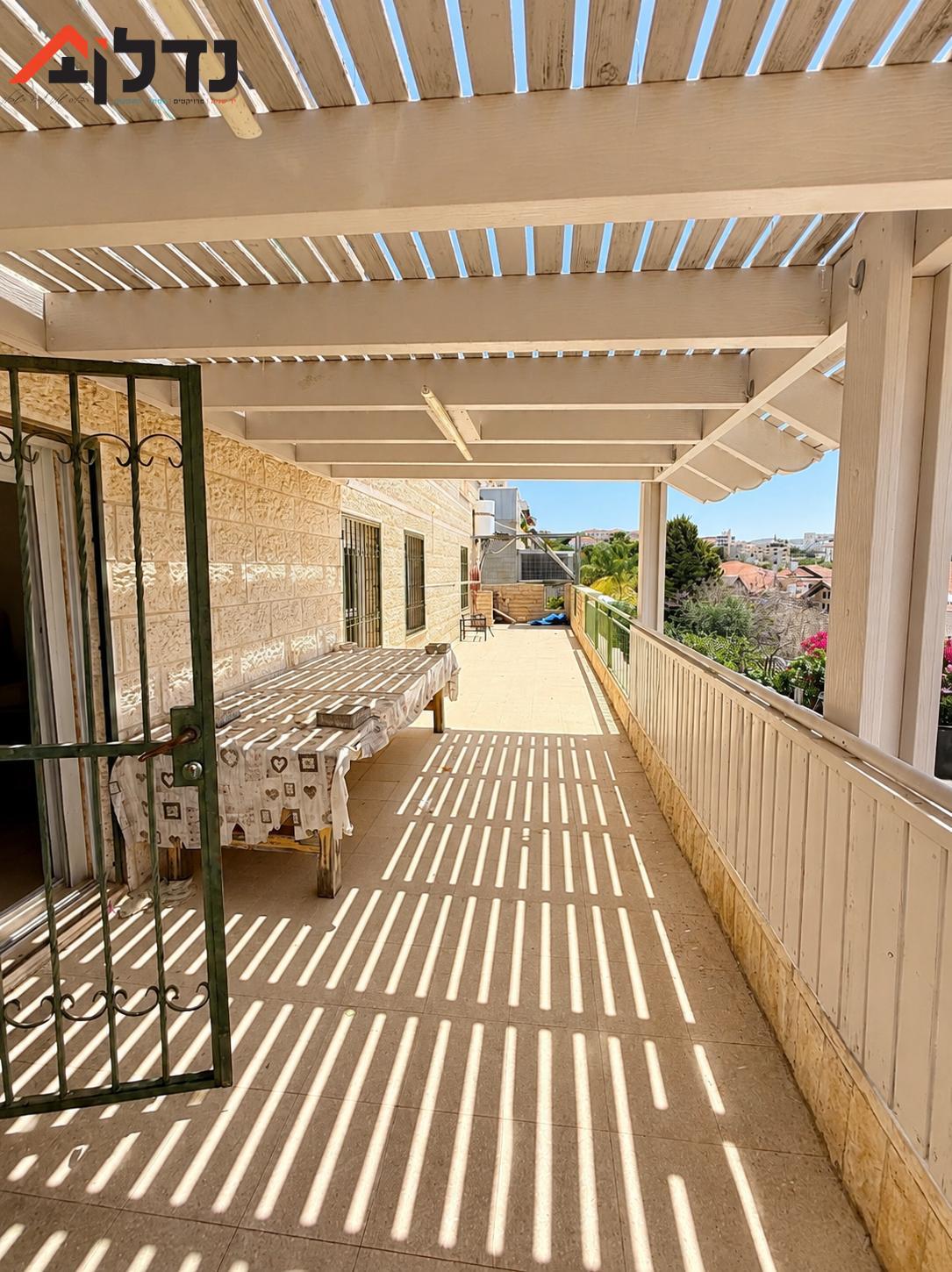

The five-room garden apartment on Nachal Nachshon shows what the category can offer at its best: 130 m² on the entrance floor, a 35 m² private garden, a 45 m² covered balcony with pergola, four bedrooms, covered parking and an option to extend. It is newly reduced to ₪3,995,000. Read the full overview or explore the area in our RBS Aleph neighborhood guide.
Key Takeaways
- Confirm the garden is registered to the apartment, not merely in use.
- Ask for permits on every addition before you sign.
- Inspect drainage, privacy and light in person, ideally after rain.
- Judge value on total usable space, not interior m² alone.
Next Steps
- Estimate your costs with the Purchase Tax Calculator.
- Arrange pre-approval through our mortgage and financial services partners.
- Find a real estate lawyer through our Service Hub.
- Call or WhatsApp Reuven Jacob on 052-561-0702 to view garden apartments in RBS Aleph.
Join The Discussion