


 by
Ask ten Anglo families in Ramat Beit Shemesh which neighbourhood is best, and you’ll get ten confident answers. Most of them will be right. For their family.
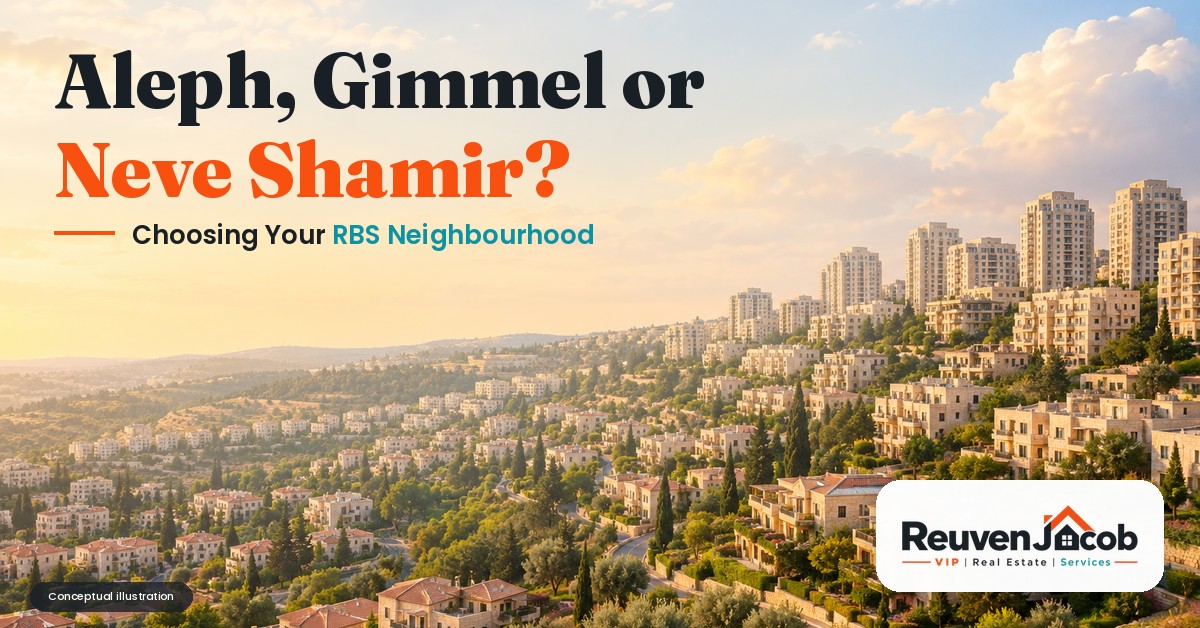
That’s the real challenge. RBS Aleph, Rama Gimmel and Neve Shamir sit within a few minutes of each other, yet they offer very different homes, price points and day-to-day lives. Beit Shemesh has also been one of Israel’s fastest-growing cities for a decade, so the map you remember from a pilot trip five years ago may already be out of date.
So how can you choose well, especially if you’re buying from New York, London or Johannesburg? Start by understanding what each neighbourhood actually is, then match it to how your family lives.
What Are You Actually Comparing?
In essence, you’re choosing between three stages of the same city’s growth.
- RBS Aleph is the established Anglo heartland. Built mainly from the 1990s onward, it is known for garden apartments, cottages and duplexes, low-rise buildings, mature parks and a long list of English-speaking shuls.
- Rama Gimmel (Gimmel 1 and Gimmel 2) is newer and denser, with larger apartment buildings and many big-family layouts. Its community is predominantly Chareidi, and daily life is built around that.
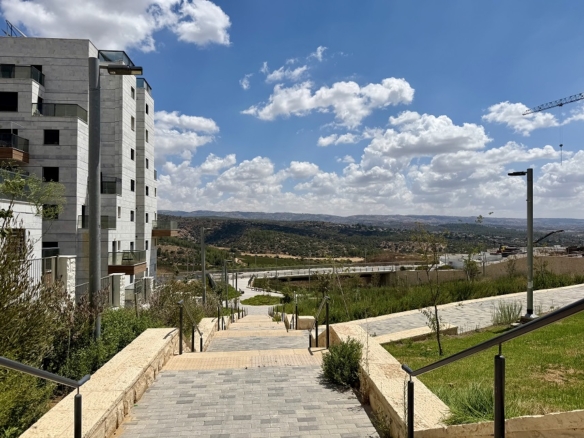
- Neve Shamir (RBS Hey) is the newest of the three. According to the local guide RamatBeitShemesh.com, it sits south of Mishkafayim, southeast of Aleph and east of Gimmel 2, is planned for 5,000 families, and saw infrastructure work begin in 2019. It is a neighbourhood of new towers, elevators, parking and mamads, with families already living in several completed projects and others still under construction.
Nefesh B’Nefesh’s Beit Shemesh community guide lists RBS Aleph, Rama Gimmel and Neve Shamir among the popular neighbourhoods for olim, alongside a citywide population of about 147,000 and a “large English-speaking population.” All three can work. The question is which one works for you.
What Will Your Budget Buy in Each Neighbourhood?
Prices in RBS are best read deal by deal, not from averages. Fortunately, every completed sale is reported to the Israel Tax Authority, and the press regularly publishes recent examples.
- Rama Gimmel: A six-room, 166 sq m ground-floor apartment with a 215 sq m yard on Ahiya Hashiloni Street sold for NIS 3.95 million, according to deals from the Tax Authority site reported by Globes in July 2025.
- Neve Shamir: In the same Globes report, a four-room, 106 sq m third-floor apartment with parking on Hashlosha Street sold for NIS 2.8 million.
- Beit Shemesh generally: In its October 2026 housing snapshot, the Times of Israel listed a four-and-a-half-room, 117 sq m apartment on Gad Street sold for NIS 2.88 million and a four-room, 103 sq m apartment on Reuven Street for NIS 2.68 million.
What does this mean in practice? A new four-room apartment in Neve Shamir and a larger secondhand home elsewhere in RBS can cost a similar amount. You are trading space and a garden against an elevator, a mamad and a brand-new building. In RBS Aleph, garden apartments and cottages are the prized stock, and they rarely come up cheaply. For current Aleph comparables, ask us for recent reported deals on the specific street.
Add to the mix the wider market. According to the Times of Israel, Central Bureau of Statistics data show national home prices down 1.8% year on year in July–August 2026, with prices falling in seven of the last 12 months, while the Bank of Israel held its rate at 3.25%. For buyers, that means more room to negotiate than at any point in recent years. It does not mean RBS is cheap.
Large apartments deserve special mention. Globes reported in 2022, using CBS data, that six-room apartments in Beit Shemesh rose 66% in two years to an average of NIS 3 million, the sharpest rise of any apartment type in Israel at the time. Big-family homes have long been the tightest part of this market, and that still shapes pricing today.
Which Community Fits Your Family?
For most Anglo buyers, this question matters more than square metres. A home is only as good as the shul you walk to on Friday night.
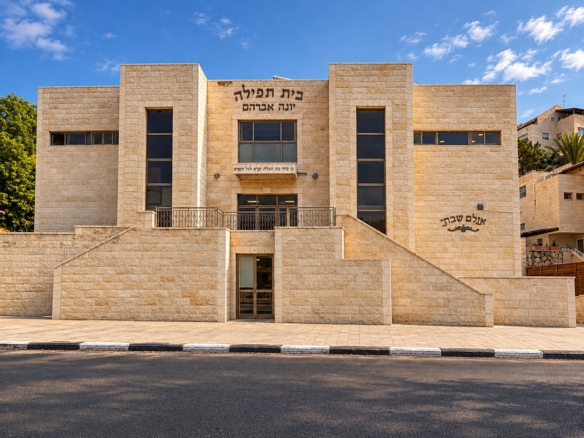
RBS Aleph has the deepest bench of English-speaking shuls, from Dati Leumi to Chareidi to everything in between. Our RBS A Shul Directory is a good place to start. Rama Gimmel offers a strongly Chareidi environment, with kollelim, chadarim and a community rhythm to match. Neve Shamir is still forming its identity, and its shuls and institutions are growing building by building.
However, labels only go so far. Two streets in the same neighbourhood can feel very different. Before you buy, spend a Shabbat there, daven in two or three shuls, and ask the gabbai who has moved in recently.
What About Schools?
Schools follow community. Nefesh B’Nefesh notes that Beit Shemesh offers all three Israeli streams: Mamlachti (state), Mamlachti Dati (state religious) and Chareidi, and links to the municipal school maps.
In practice, the question isn’t only “Which school?” but “How will my children get there?” Families in Aleph often walk. In a newer area, a school may be a bus ride away until local institutions open. Check registration zones with the municipality before you sign, not after.
How Long Is the Commute to Jerusalem?
All three neighbourhoods share the same main road links. Route 38 links Beit Shemesh to Route 1. According to Globes, the upgraded 10 km section opened in 2017 with two lanes in each direction, new interchanges and a 90 km/h limit, at a cost of NIS 800 million. Route 375, through the hills toward Tzur Hadassah, is the alternative many RBS drivers use for southern Jerusalem.
Rail is a different story. Nefesh B’Nefesh puts it plainly: “The Tel Aviv train line is more practical than the train line to Jerusalem.” The Beit Shemesh station itself was renovated in 2025 at a cost of more than NIS 5 million, according to TPS/ANI, with the Transportation Minister calling it “a fast and convenient connection to Gush Dan.” For Jerusalem commuters, buses and cars remain the main options.
What does this mean in practice? If you’ll commute daily, time the drive at rush hour from the actual street, and check which bus lines stop nearby.
How Will Development Change the Picture?
Beit Shemesh is a city under construction, and that affects every neighbourhood differently. According to the Times of Israel, plans first reported in 2022 envisaged the city growing toward 500,000 residents, including about 4,600 apartments south of Ramat Beit Shemesh, backed by more than NIS 500 million in government funding for transport, public buildings and services.
For Aleph, growth means more traffic but also more services nearby. For Neve Shamir, it means years of cranes, along with new shops, parks and institutions as each phase completes. Think of it like moving into a house while the extension is still being built: the finished result can be excellent, but you need patience in the meantime. Our Development Watch tracks what’s actually moving.
So How Should You Decide?
Before you fall in love with a floor plan, work through these questions as a family:
- Who do you want to daven with? Shortlist two or three shuls first, then look at homes within walking distance.
- What does your family need from the space? Garden and ground-floor living points toward Aleph or a Gimmel garden apartment. An elevator, parking and a modern mamad point toward Neve Shamir.
- Where will the children learn? Confirm school streams, places and transport for each child.
- How will you get to work? Test the commute at rush hour, by car and by bus.
- What’s your real budget in shekels? Model the purchase in shekels, add purchase tax, legal fees and agent fees, and stress-test it for currency moves if your income is in dollars or pounds.
- Can you live with construction? If you buy new in Neve Shamir, ask what’s planned around you and when.
- What do recent deals say? Compare asking prices with deals reported to the Tax Authority on the same street, not citywide averages.
Tax, legal and mortgage figures change. Confirm them with your lawyer and mortgage adviser before you commit.
Looking Ahead
The good news is that there is no wrong answer here, only a better fit. Aleph offers roots, gardens and an established Anglo community. Gimmel offers space and a strong Chareidi framework. Neve Shamir offers new construction and a community still being built. For a deeper look, read our guides to Living in Neve Shamir and Garden Apartments in RBS Aleph.
If you’d like to walk the three neighbourhoods with someone who has served Beit Shemesh buyers for over 20 years, we’re happy to help, together with the mortgage brokers, builders and architects we work with. Call 052-561-0702 or learn more at reuvenjacob.com.
Sources
- RamatBeitShemesh.com: Neve Shamir (updated 12 Aug 2026)
- Nefesh B’Nefesh: Beit Shemesh / RBS Community Guide (updated 3 Nov 2025)
- Globes: Apartments sold and rented (Israel Tax Authority deals), 20 Jul 2025
- Times of Israel: Housing snapshot October 2026, 30 Oct 2026
- Globes: Big Beit Shemesh apartments lead price rises, 18 Aug 2022
- Globes: Beit Shemesh highway opens, 9 Aug 2017
- The Tribune (ANI/TPS): Israel: Beit Shemesh train station upgraded, 16 Jul 2025
- Times of Israel: Beit Shemesh hopes to quadruple population with new housing, commercial plans, 7 Jun 2022

Join The Discussion