


 by
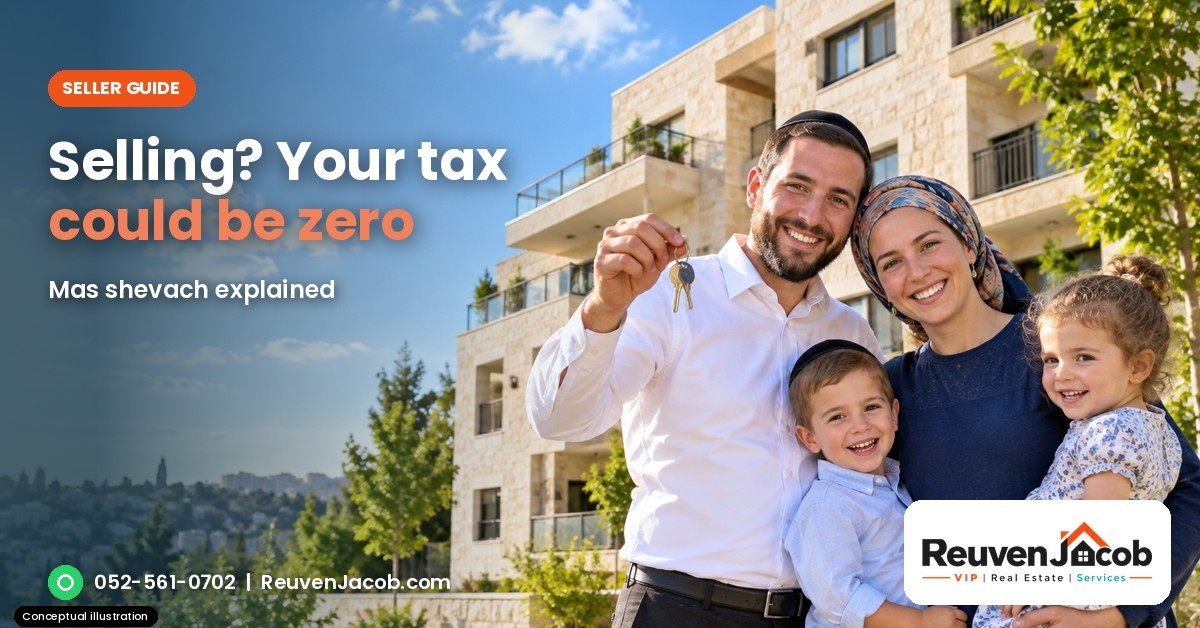
Many Beit Shemesh homeowners are sitting on a gain they never planned for. An apartment bought in RBS Aleph fifteen or twenty years ago may be worth two or three times what was paid for it.
That’s good news, until someone mentions mas shevach. Israel’s capital gains tax on real estate can take a quarter of the profit. Or, for many families selling their only home, it can be zero.
The difference comes down to a handful of conditions. Knowing them before you list your home can be worth more than any negotiation.
What Is Mas Shevach?
Mas shevach is the tax on the increase in value of real estate when you sell it. According to Buy It in Israel, the general rate is 25% of the real gain: the sale price minus the purchase price, approved expenses and inflation adjustments.
It’s paid by the seller. (Its counterpart, purchase tax, is paid by the buyer; you can estimate it with our purchase tax calculator.)
The Single-Home Exemption
This is the one most families rely on. If you’re an Israeli resident selling your only home, the sale can be exempt in full or in part. Buy It in Israel lists the main conditions:
- It’s your only residential property in Israel. Owning up to a third of another home doesn’t count against you.
- You’ve owned it for at least 18 months, counted from completion for a new build.
- The exemption has a ceiling. The cap is a sale price of ₪5,008,000, frozen for 2024 to 2027, according to Mako (Hebrew). Above that, the first ₪5,008,000 can still be exempt, with regular mas shevach on the excess.
Most family apartments in Ramat Beit Shemesh sell well below that ceiling, so for a typical RBS seller with one home, the exemption often covers the whole gain. If you’re not sure where your home sits, our guide on how to price your home so it sells is a good place to start.
Selling One Home and Buying Another
Upgrading families often buy the new home before selling the old one. For a period, they own two apartments, which seems to break the “only home” rule.
It doesn’t have to. You can still qualify if you sell the old home within a set period after buying the replacement. After Operation Rising Lion those windows were extended by three months: replacement homes bought between late August 2024 and late May 2025 generally get 21 months (or until the end of August 2026, if later), and those bought from June 2025 to the end of May 2026 get 27 months, according to Bizportal (Hebrew). Miss your window, and the exemption can be lost.
The same window matters for purchase tax on the new home. Diarise it from the day you sign.
The Linear Method for Older Purchases
If you bought before 1 January 2014 and don’t qualify for a full exemption, there’s still good news. Under the linear method, only the part of the gain attributed to the period from 2014 onward is taxed at the regular rate.
Buy It in Israel gives a simple example: buy in 2000, sell in 2025, and the taxable share is based on 11 of the 25 years. For long-time RBS owners, that can sharply reduce the bill on a second apartment.
What Can You Deduct?
The gain isn’t simply sale price minus purchase price. Buy It in Israel lists deductible costs including:
- Purchase tax you paid when you bought
- Legal and agent fees, on both purchase and sale
- Renovation costs
- Inflation adjustments
Keep receipts. A kitchen renovation from ten years ago may reduce your tax today, but only if you can prove it.
What If You Live Abroad?
This is where many Anglo owners get caught out. Buy It in Israel notes that foreign residents generally can’t use the main single-home exemption available to Israeli residents, though the linear method may still help. Residency for tax purposes depends on where you actually live, not your passport.
If you own a Beit Shemesh apartment from abroad, take advice well before you sell.
Timeline and Filing
According to Buy It in Israel, a sale must be reported to the Tax Authority within 40 days of signing, and any tax due is paid within 60 days. Your lawyer handles the filing, including any exemption claim. Our guide to choosing a real estate lawyer covers what else they do.
Before You List: A Checklist
- Do you own any other residential property in Israel, even a share?
- When did you buy, and was it before 2014?
- Have you bought a new home? If so, when does your sale window close?
- Do you have receipts for renovations and fees?
- Are you an Israeli tax resident?
- Ask your lawyer for a tax estimate before you agree a price.
Tax rules and ceilings are as reported on the dates shown and can change. This is general information, not tax or legal advice; consult a qualified lawyer or accountant.
Looking Ahead
Selling a home is often the largest financial transaction a family makes, and the tax side is where quiet preparation pays off. For most RBS families selling their only home, the news is good. For those with two homes, older purchases or ties abroad, an hour with a professional before listing can be the best-paid hour of the year.
Reuven Jacob helps Beit Shemesh sellers price their homes accurately and works with lawyers and accountants who handle the tax side. Call 052-561-0702 or learn more at reuvenjacob.com.

Join The Discussion